

Wet Basement Repair in Corrigan, TX
Wet basement repair in Corrigan, TX. Ask about the foil test first. It is free, and it tells you whether you need a $300 dehumidifier or a drain system.
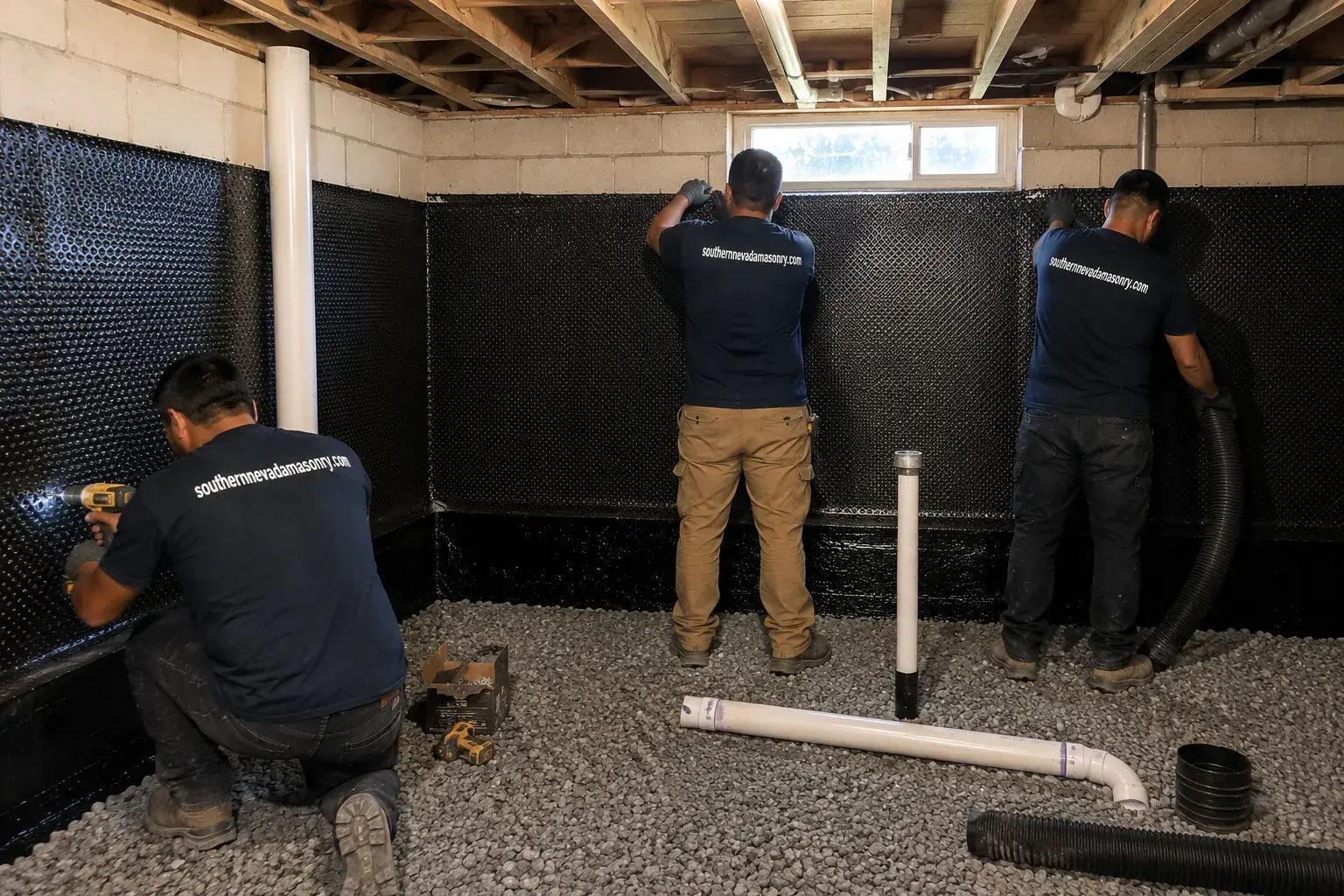

Best Wet Basement Repair in Corrigan, TX
Do this before you call anyone, including us. It costs nothing, takes two minutes to set up, and it decides whether you need a $300 dehumidifier or a $6,000 drainage system. Almost nobody searching wet basement repair near me has done it, and the companies quoting them have no reason to suggest it.
Tape a twelve inch square of aluminum foil flat against the damp part of the wall. Seal all four edges with tape so no air can slip behind it. Dry the surface with a hair dryer first so you are starting clean. Then leave it alone for 24 to 48 hours.
Now peel it off and look at which side is wet.
Wet on the room side means condensation. Warm humid air in the basement is touching a cold wall and giving up its moisture, exactly like a glass of iced tea in July. That is an air problem and drainage will not fix it.
Wet on the wall side means seepage. Water is moving through the concrete or block from the soil outside, and no dehumidifier in the world will stop it.
Wet on both sides means you have both, which is common, and the seepage gets fixed first.
Run the test in three or four places, including one square on the floor. A basement can be condensing in one corner and seeping at a crack twelve feet away, and a single test in the wrong spot sends you down the wrong road entirely.
If it comes back as condensation, buy a hygrometer for about twenty dollars and start reading the humidity. The target is under 60 percent, and 30 to 50 is better. Above 60 percent, mold will grow on almost any surface in that room that collects dust.
The fix is a properly sized dehumidifier, air sealing around rim joists and windows, and insulating cold surfaces so they stop reaching the dew point. A portable unit runs $200 to $500 and a whole basement unit installed with a drain line runs $1,300 to $2,800.
Here is the mistake people make every summer around Corrigan, TX. They open the basement windows to air it out.
That makes it worse. Warm outside air in July carries far more moisture than the cool air already down there, so the minute it hits your walls it condenses. Ventilation is the wrong tool for summer dampness, and university extension guidance has said so for years.
If the test comes back as seepage, the work is different. Where water is coming through one crack, injection runs $800 to $1,500. Where it is arriving along the whole base of the wall at the joint where the floor meets it, that is an interior drainage system, usually $3,000 to $8,000. Exterior excavation averages far more.
Before any of that, walk outside. The code asks for the ground to fall at least six inches within the first ten feet away from the house, and a surprising number of wet basement repair near me calls end with gutters, downspout extensions and a regrade for a few hundred dollars.
Learn to read the clues too. White chalky powder on the wall is efflorescence, salt left behind as water passed through the masonry and evaporated. It tells you water is moving, not that the wall is failing. A horizontal stain line at a consistent height is a tide mark from water that stood there. A musty smell that gets stronger a day after rain points to seepage rather than humidity.
By the time a basement smells musty, humidity has been high for a long while. Measure it rather than trusting your nose.
We run the foil test with homeowners across Corrigan, TX before writing anything down, and we have talked plenty of people out of drainage systems they did not need. If you searched wet basement repair near me and want to know which problem you actually have, call (833) 769-2615 and we will walk you through it on the phone first.